
Tooth whitening can temporarily increase sensitivity in some people, particularly where enamel wear, gum recession, grinding, or existing dental problems are already present. A professional dental assessment helps identify whether whitening is suitable, which whitening approach may be more comfortable, and whether other treatment should occur before whitening begins.
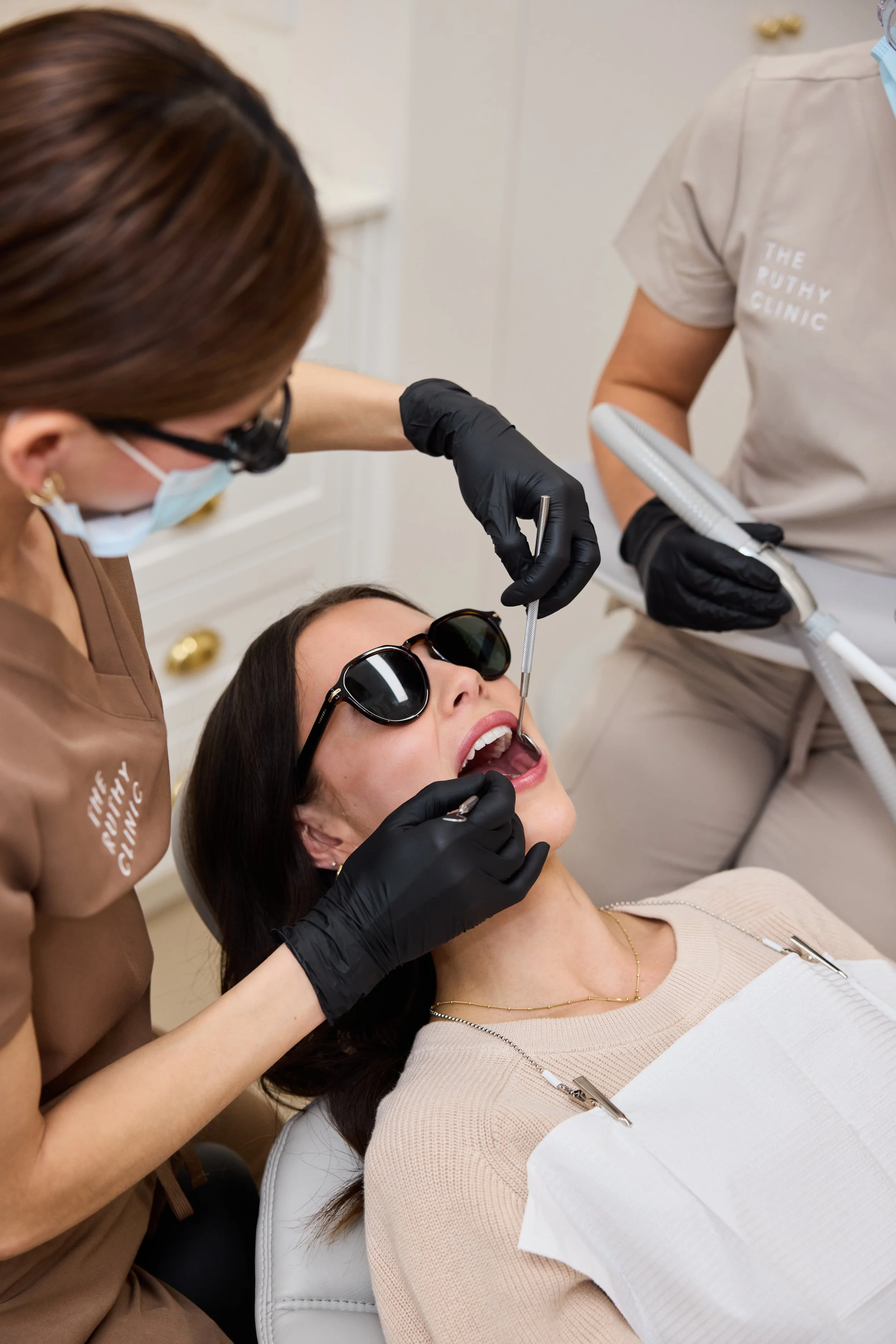
Some patients stop considering whitening altogether after hearing stories about “shooting pain” or lingering sensitivity following treatment. Others have already tried whitening strips at home and found their teeth became uncomfortable even when drinking cold water. For people who already experience occasional sensitivity, the idea of whitening can feel unpredictable.
Sensitivity after whitening is real, but it does not happen in the same way for every person. The underlying condition of the teeth often plays a larger role than the whitening product itself.
At The Ruthy Clinic, whitening treatment is approached with attention to oral health, enamel condition, and long-term comfort rather than simply trying to achieve the lightest possible shade. Patients exploring teeth whitening Launceston options are often surprised to learn that sensitivity risk can sometimes be reduced through careful assessment and treatment planning beforehand.
Why Whitening Can Trigger Tooth Sensitivity
Professional whitening products work by penetrating the enamel and breaking down stain molecules within the tooth structure. During this process, the nerves inside the teeth can become temporarily more reactive.
For some people, this may feel like:
Brief sensitivity to cold drinks
Intermittent sharp sensations
Temporary aching after whitening sessions
Increased awareness of certain teeth
Sensitivity during brushing
These symptoms are often temporary, but the degree of discomfort varies significantly between individuals.
Patients with healthy enamel and minimal sensitivity history may notice very little change. Others with worn enamel, exposed dentine, or pre-existing tooth problems may react much more strongly.
Sensitivity Is Sometimes a Sign of Another Dental Issue
One of the most important parts of whitening assessment is identifying whether the teeth are already vulnerable before whitening begins.
Sensitivity can sometimes indicate:
Enamel erosion
Gum recession exposing root surfaces
Cracked teeth
Tooth grinding or clenching
Early decay
Leaking fillings
Previous dental trauma
Worn enamel from acidic foods or reflux
In these situations, whitening may temporarily intensify symptoms because the protective enamel barrier is already compromised.
This is one reason patients are often encouraged to have a dental assessment before using stronger whitening products, particularly if they already describe their teeth as “sensitive.”
Why Some Teeth React More Than Others
Not every tooth responds identically during whitening.
Some people notice one specific tooth becoming more sensitive than the others. In some cases, this may relate to previous dental trauma, an old filling, enamel thinning, or microscopic cracks within the tooth structure.
Teeth that have undergone root canal treatment also behave differently because the nerve inside the tooth is no longer vital. This means whitening results may vary across the smile where different types of teeth and restorations are present.
Part of professional whitening planning involves assessing these inconsistencies before treatment begins.
The Difference Between Temporary Sensitivity and Problematic Pain
Mild temporary sensitivity can occur during whitening without indicating damage to the teeth.
However, more significant pain may suggest the whitening approach needs adjustment or that underlying dental problems require attention first.
Patients should seek professional advice if they experience:
Pain that continues well after whitening sessions
Sensitivity severe enough to interrupt eating or sleeping
Lingering throbbing sensations
Sharp pain isolated to one tooth
Swelling or gum irritation
Pain triggered even without cold or hot foods
Many online discussions around whitening describe situations where patients continued whitening despite worsening discomfort because they assumed the pain was “normal.” In reality, ongoing severe pain should still be assessed properly.
What Dentists Usually Assess Before Whitening Treatment
Whitening suitability is not determined by tooth colour alone.
A professional assessment generally considers several factors that may influence comfort, safety, and the expected result.
Gum Health and Inflammation
Inflamed gums or untreated gum disease may increase discomfort during whitening treatment.
Healthy gum tissue also contributes significantly to how whitening results appear overall. Sometimes a professional clean and improvement in gum health changes the appearance of the smile more than patients initially expect.
Existing Restorations
Fillings, crowns, veneers, and composite bonding do not usually whiten in the same way as natural teeth.
Patients with visible restorations may eventually notice mismatched shades after whitening if older dental work no longer blends with surrounding teeth.
For patients considering broader smile changes, a consultation with a cosmetic dentist Launceston provider may help determine whether whitening alone is likely to achieve the desired outcome.
Enamel Thickness and Wear
Thinner enamel can sometimes increase sensitivity risk because the underlying dentine becomes more exposed.
Wear patterns may develop gradually through:
Grinding or clenching
Acidic diets
Reflux
Aggressive brushing
Age-related enamel thinning
These changes are not always obvious to patients until whitening treatment increases tooth awareness.
Type of Tooth Discolouration
Different types of staining respond differently to whitening.
Surface staining from coffee, tea, smoking, or red wine may respond relatively predictably. Internal staining caused by trauma, medications, or enamel defects may behave differently.
In some cases, whitening may improve brightness without completely changing the underlying colour tone.
Why Overusing Whitening Products Can Create Problems
A common pattern discussed online involves patients repeatedly whitening their teeth because they gradually stop noticing the change.
This can sometimes lead to:
Ongoing sensitivity
Gum irritation
Uneven whitening
Increased enamel dehydration
Unrealistic colour expectations
Whitening trends on social media can also distort what natural tooth colour should realistically look like.
For many patients, a balanced result that still resembles natural enamel appears healthier and more harmonious than an extremely opaque white shade.
Whitening Strips, LED Kits, and Professional Treatment
Many people first try over-the-counter whitening before speaking with a dentist Launceston.
Whitening strips, LED devices, whitening pens, and supermarket products are widely available, but they are not always designed around the individual condition of the teeth.
Some patients tolerate these products well. Others experience sensitivity because:
Whitening trays do not fit properly
Products are overused
Existing enamel problems are already present
Whitening concentrations are unsuitable
The gums become irritated
Professional whitening differs because the treatment approach can be adjusted based on the patient’s dental history, sensitivity level, and cosmetic goals.
Patients considering professional teeth whitening Launceston treatment are often looking for a more personalised and monitored approach rather than trial-and-error whitening at home.
Why Whitening Sometimes Does Not Produce the Expected Result
Some patients become frustrated when whitening improves brightness slightly but does not completely change the appearance of their smile.
This can happen where concerns are actually linked to:
Old fillings or crowns
Uneven tooth shape
Surface wear
Grey-toned enamel
Internal staining
Smile asymmetry
In these situations, whitening may still play a role within broader cosmetic planning, but additional treatment may sometimes be discussed.
For example, some patients exploring long-term cosmetic changes later consider options such as veneers Launceston treatment where concerns involve shape, symmetry, or more complex colour inconsistencies.
A Conservative Approach Often Produces More Natural Results
One of the strongest themes in patient discussions online is the fear of teeth looking unnaturally white.
Professional whitening does not need to create a dramatic cosmetic transformation to be effective. Subtle improvement can often brighten the smile while still preserving natural variation and translucency within the enamel.
At The Ruthy Clinic, whitening discussions are approached with consideration of facial balance, existing enamel characteristics, and long-term smile aesthetics rather than trend-based whitening expectations.
Teeth Whitening Consultations Across Greater Launceston
Patients often seek whitening consultations in Launceston when they notice increasing staining, uneven colour, or changes linked to ageing enamel and lifestyle habits.
People from Legana, Riverside, Trevallyn, and Newstead commonly attend appointments before weddings, work events, photographs, or cosmetic dental treatment planning. Many also want guidance around sensitivity because previous whitening attempts at home caused discomfort or inconsistent results.
Because whitening outcomes vary from person to person, patients frequently value having realistic discussion around comfort, expected shade change, and long-term maintenance before treatment begins.
Disclaimer: The information in this article is for general educational purposes only and does not replace professional dental advice. Individual sensitivity levels, enamel condition, and whitening suitability vary between patients. Always consult a qualified dental practitioner before beginning whitening treatment or using whitening products if you experience tooth sensitivity.