
What Does “Natural-Looking” Actually Mean in Facial Aesthetics?
A natural-looking facial aesthetics result supports balance without making the procedure itself the most noticeable feature. Planning considers facial anatomy, expression, skin quality, existing asymmetry, previous procedures and personal preferences. A consultation should assess the face at rest and in motion, explain realistic limitations and preserve the characteristics that make each person recognisable.
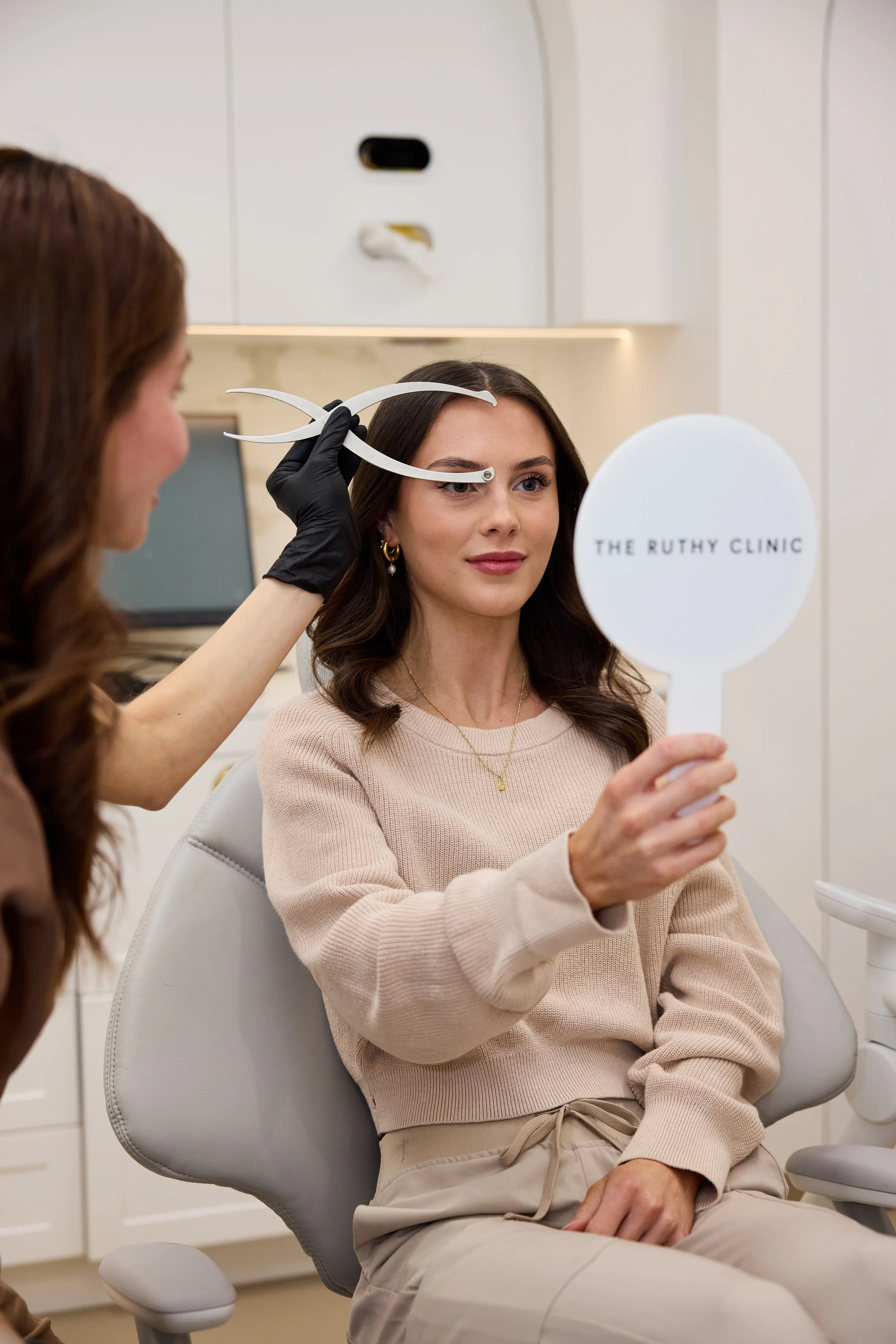
“Natural-looking” can mean something different to every patient.
One person may want a feature to feel softer while retaining familiar expression. Another may hope to look more rested without friends or colleagues identifying a specific change. Some patients simply want to understand their options and decide that no procedure is necessary.
The phrase often reflects an important boundary: the patient would like to see an improvement, but does not want the treatment to become the first thing others notice.
Creating that balance is not a matter of following a standard template or treating every visible line. It begins with understanding the individual face, the patient’s goals and the features they want to preserve.
At The Ruthy Clinic, a facial aesthetics consultation in Launceston considers health, facial movement, proportion and long-term wellbeing before any procedure is discussed.
Natural Appearance Is Not the Same as Perfect Symmetry
Human faces are naturally asymmetrical.
One eyebrow may sit slightly higher. The cheeks may differ subtly in shape, and each side of the smile may move in its own way. These variations are common and often contribute to a person’s recognisable appearance.
Attempting to remove every difference may lead to unnecessary intervention. Treating one asymmetry can also make another feature more noticeable, even when it was not a concern beforehand.
A thoughtful assessment therefore considers whether a difference genuinely disrupts facial balance and whether changing it would offer a meaningful benefit.
In some cases, softening a feature may be appropriate. In others, preserving the natural variation may produce the more harmonious result.
The aim is not mathematical perfection. It is a result that remains connected to the person’s own facial character.
Expression Must Be Considered Alongside Appearance at Rest
A face is rarely still.
It changes during conversation, laughter, concentration and emotion. Muscles around the forehead, eyes, brows and mouth work together, and adjusting one area may influence how neighbouring regions move.
This is why facial assessment should extend beyond a single photograph.
A practitioner may observe:
How the brows move during expression
Whether one side is naturally more active
How the smile changes the cheeks and lower face
Which lines appear only with movement
Which features remain visible at rest
How neighbouring muscles contribute to overall expression
Preserving expression does not necessarily mean leaving every movement unchanged. It means considering how the face communicates and avoiding a result that feels disconnected from the patient’s normal appearance.
A treatment plan may therefore leave some movement or natural lines present intentionally.
Proportion Often Matters More Than One Isolated Feature
Patients commonly arrive focused on a particular area. However, facial features are visually connected.
The appearance of the lips is influenced by the teeth, jaw, surrounding skin and lower-face proportions. The cheeks relate to the eyes, temples and facial width. Brow position affects how the upper face is perceived.
Changing one feature without considering the whole face may create imbalance, even when that individual area looks acceptable on its own.
Assessment may include:
The relationship between the upper, middle and lower face
Chin and jaw position
Skin and soft-tissue distribution
Dental and skeletal support
Lip movement and profile
Transitions between neighbouring areas
Normal age-related change
A patient may discover that the procedure they initially requested is not the most appropriate way to address their concern. The practitioner may suggest a smaller plan, another form of care or no intervention.
Natural-Looking Does Not Mean No Visible Change
Patients sometimes expect a result to be meaningful to them while remaining completely undetectable to everyone else.
That may be possible in some circumstances, but expectations need to remain realistic.
A subtle result can still be visible. An area may appear more balanced, movement may be softened or the relationship between features may change. The result tends to feel natural when it remains proportionate and does not draw attention away from the face as a whole.
Temporary effects can also influence the early appearance after a procedure. Depending on the treatment, patients may experience swelling, bruising, tenderness or short-term asymmetry before the result settles.
Before deciding, patients should understand:
What degree of change may be realistic
When the effect is expected to develop
Which temporary reactions can occur
What the procedure cannot reliably achieve
When review may be appropriate
Which symptoms require prompt clinical advice
Clear expectations are more useful than promises that a result will be invisible or perfect.
Normal Ageing Does Not Automatically Require Treatment
Lines, skin texture changes and shifts in facial support are normal parts of ageing.
Their presence does not mean the face is unhealthy or that intervention is necessary. Some patients want to soften one concern while retaining age-appropriate expression. Others prefer to focus on skin health or decide that understanding their options is enough.
A responsible consultation should not present normal ageing as a defect.
The discussion should remain guided by the patient’s priorities, health and comfort with the potential risks and limitations. The option not to proceed should remain available without pressure.
This reflects The Ruthy Clinic’s philosophy of health, individuality and facial harmony, where aesthetic care is intended to refine rather than standardise.
Previous Procedures Can Affect Future Planning
A patient’s treatment history remains relevant even when a previous visible effect appears to have reduced.
Earlier procedures may continue to influence facial proportions, movement or tissue behaviour. Patients may not remember the precise product, amount or placement, especially when treatment occurred years earlier or at another clinic.
A new practitioner may ask about:
Areas treated previously
Approximate treatment dates
Changes noticed over time
Results that felt too strong or too subtle
Any unwanted reactions
Whether corrective care was needed
Features the patient does not want changed again
When information is incomplete, a cautious approach may be appropriate.
Changing practitioners should involve a fresh assessment rather than automatically repeating an earlier treatment map. Facial movement, tissue support and personal preferences can all change over time.
Skin Quality May Be the More Relevant Concern
Not every facial concern relates primarily to movement or volume.
Uneven tone, dehydration, texture, redness, pigmentation and sun-related changes can influence how rested or balanced the face appears. In these situations, a higher-risk cosmetic procedure may not address the main issue.
A practitioner may suggest discussing skin-focused care where concerns involve:
Surface texture
Uneven pigmentation
Redness
Dehydration
Fine lines associated mainly with skin quality
General loss of radiance
This does not mean different treatment categories are interchangeable. It means the source of the concern should be assessed before any recommendation is made.
Patients interested in skin health can explore the clinic’s skin treatments in Launceston as part of a broader discussion about their goals.
A Natural Plan May Include Doing Less
A restrained approach is not defined only by using a smaller quantity.
It also involves deciding what should remain untreated, whether several changes are necessary and how much alteration the patient genuinely wants.
A practitioner may recommend:
Addressing one priority at a time
Allowing time before considering another procedure
Preserving movement in selected areas
Choosing a skin-focused option instead
Postponing treatment until previous procedures have settled
Declining a request that is unsuitable or disproportionate
The ability to advise against treatment is part of responsible care.
A patient-centred consultation should allow the practitioner to explain why a request may not be appropriate while ensuring the patient feels heard and respected.
Subtle Treatment Still Carries Risk
A natural-looking goal does not make a cosmetic procedure risk-free.
Potential effects vary according to the procedure, treatment area and individual patient. They may include bruising, swelling, discomfort, infection, asymmetry, unwanted changes or other complications. Some complications can be serious and require urgent clinical management.
Before proceeding, patients should receive clear information about:
Expected effects and limitations
Common and significant risks
Aftercare requirements
Warning signs
Follow-up arrangements
Available alternatives
The option of no treatment
Patients should also understand who is assessing and treating them, the practitioner’s registered profession and how clinical concerns are managed after the appointment.
Information about Dr Ruthy Hernandez’s dental background and advanced training in facial aesthetics is available on The Ruthy Clinic team page.
Natural-Looking Care Begins With Listening
A natural result is not created by removing every line or reproducing a fashionable facial shape.
It begins with understanding what the patient has noticed, what they hope may change and which characteristics they value. It requires assessment of the face as an expressive whole and enough restraint to preserve familiar features.
A consultation may lead to a conservative plan, a different approach, a decision to wait or no procedure at all.
Each can be appropriate when it reflects the patient’s health, anatomy, expectations and long-term wellbeing.
At The Ruthy Clinic, the focus is not on creating uniformity. It is on providing thoughtful guidance so patients can make informed decisions about care that respects their individuality.
Disclaimer: This article provides general educational information about facial aesthetics consultations and natural-looking treatment planning. It does not advertise or recommend a particular prescription medicine and does not replace personalised medical advice. Higher-risk cosmetic procedures carry potential risks, and suitability and outcomes vary between individuals. A face-to-face consultation with an appropriately qualified registered health practitioner is required before any treatment decision is made.