
Why a Cosmetic Consultation May Recommend Less Than You Requested
A facial aesthetics practitioner may recommend less than a patient initially requested when a smaller or staged plan is more appropriate for their anatomy, movement, health history and goals. This allows time to assess the response, preserve familiar facial characteristics and avoid making several changes before the outcome of the first stage can be reviewed.
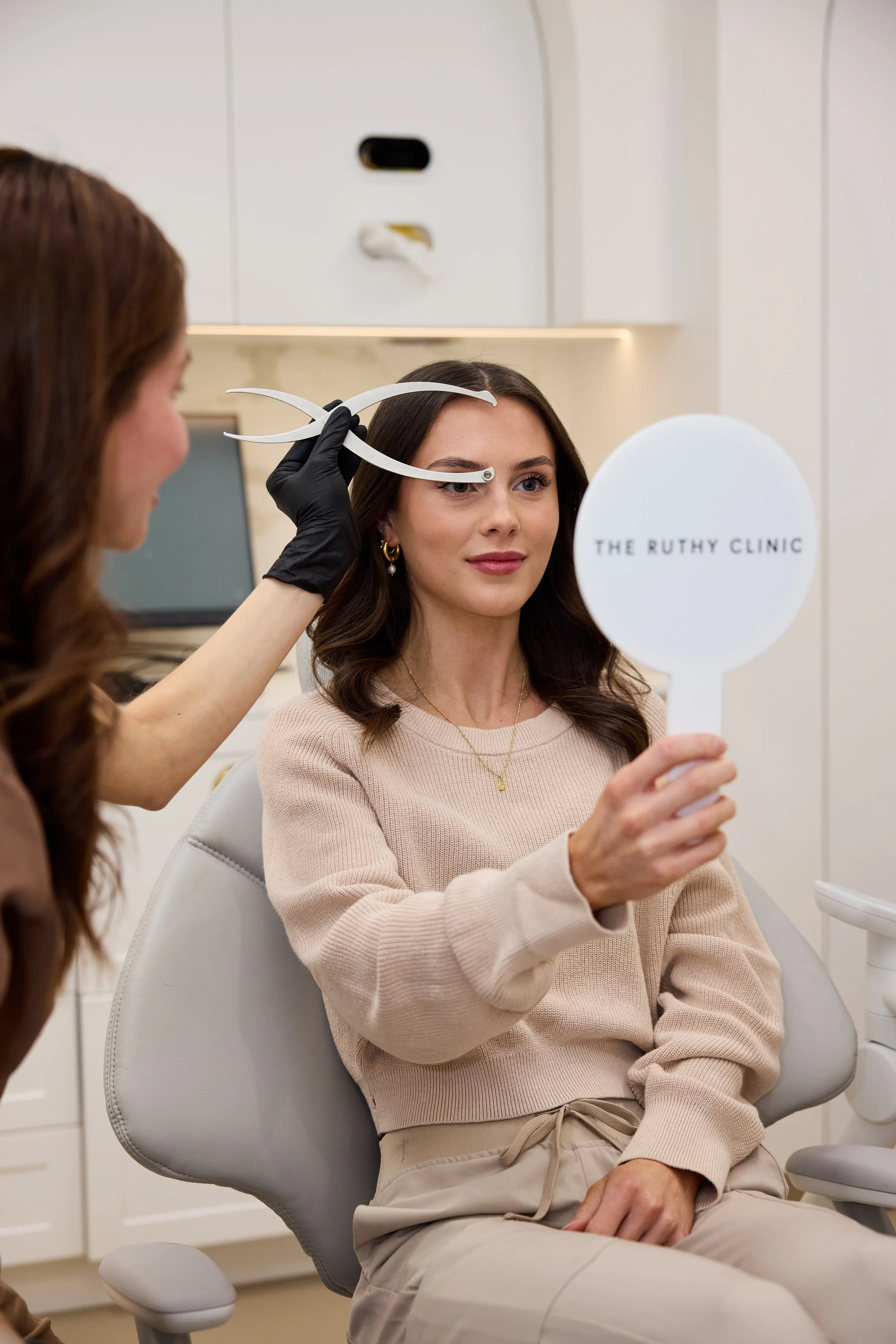
Patients often arrive at a facial aesthetics consultation with a clear idea of what they would like to discuss. They may have noticed a change over time, saved reference photographs or selected a treatment category when making the booking.
It can therefore feel unexpected when the practitioner suggests a smaller plan, recommends waiting or advises that the requested procedure may not be suitable.
This does not necessarily mean the concern has been dismissed. A careful consultation should explore what the patient has noticed, why it matters to them and what they hope to avoid. The practitioner must then consider whether the proposed change is realistic, proportionate and appropriate for the individual.
At The Ruthy Clinic, a facial aesthetics consultation in Launceston is intended to guide an informed decision rather than confirm a procedure before assessment.
The Consultation Comes Before the Procedure
An online booking cannot account for the full clinical picture.
Before recommending any higher-risk cosmetic procedure, a registered practitioner may need to review:
Medical conditions and current medicines
Previous cosmetic or surgical procedures
Allergies and earlier reactions
Skin and tissue health
Facial movement and existing asymmetry
The patient’s expectations
Whether informed consent can be provided
The risks and limitations of the available options
Information gathered during the consultation may change the original plan. The practitioner may identify a reason to postpone treatment, request further information or suggest that another approach is more appropriate.
A consultation can also conclude without a procedure. Receiving a professional assessment and deciding not to proceed can still be a useful outcome.
More Change Is Not Always More Balanced
Faces do not respond according to a standard treatment template.
A change that appears subtle for one person may be more noticeable for another because facial proportions, tissue characteristics and previous procedures differ. Repeating treatment without first understanding what remains from earlier appointments may also produce gradual changes that were not intended.
A practitioner may recommend less when:
Existing proportions are already balanced
Previous treatment may still influence the area
The requested change could appear too prominent
Natural asymmetry does not require full correction
Several procedures at once would make the response difficult to assess
The expected benefit is limited
Another option may better address the concern
The objective should not be to reach a predetermined quantity. It should be to decide whether a proposed change fits the person’s anatomy, preferences and broader facial balance.
Facial Movement Can Alter the Plan
A still photograph provides limited information.
The face changes while speaking, smiling, concentrating and resting. One side may move more strongly than the other, and neighbouring muscles may influence the position of the brows, eyes or mouth.
Assessment in motion helps the practitioner understand:
Which features are present at rest
Which changes appear mainly during expression
Whether movement differs between sides
How one area relates to surrounding structures
What should remain untouched to preserve familiar expression
This can lead to a more restrained recommendation than the patient anticipated.
The purpose is not to remove every line or visible difference. It is to consider whether intervention is likely to support facial harmony without making the procedure itself the most noticeable feature.
Previous Procedures Need to Be Considered
A patient may feel that an earlier result has disappeared, yet previous treatment can still be relevant to future planning.
When changing clinics, the new practitioner may ask about:
The areas previously treated
Approximate treatment dates
Changes noticed over time
Any unwanted effects
Whether corrective care was needed
What the patient would prefer to avoid
Where records are unavailable, a cautious approach may be appropriate. Attempting to copy an earlier treatment plan without reassessing the face can overlook changes in movement, tissue support or patient preference.
A fresh consultation is particularly important when the previous result felt too strong, uneven or unlike what the patient expected.
Staging Creates Time to Review
A staged plan separates treatment decisions rather than completing several changes at once.
This may involve addressing one priority first, allowing the expected response to develop and then reviewing whether anything further is appropriate.
Staging can be useful because it allows the patient and practitioner to observe:
How the area responds
Whether the initial concern has improved sufficiently
How the change appears during everyday expression
Whether comfort and movement remain acceptable
Whether further intervention is still wanted
A staged approach does not guarantee a particular outcome or remove medical risk. It simply creates a more measured decision point before additional changes are considered.
Perfect Symmetry Is Not the Goal
Natural faces contain variation.
One eyebrow may sit higher. The jaw may be slightly different on each side. The smile may move unevenly during speech. These differences are common and often contribute to a person’s recognisable appearance.
Trying to remove every asymmetry may require unnecessary intervention and can sometimes make another difference more noticeable.
A practitioner may recommend leaving a feature alone when correction would offer little benefit or disrupt the balance of the face as a whole.
This reflects The Ruthy Clinic’s health-led philosophy of facial harmony and individuality, where care is guided by the person rather than a universal aesthetic ideal.
The Requested Procedure May Not Match the Concern
Patients understandably describe concerns using the treatment language they have encountered online. However, a feature that appears related to volume, movement or ageing may have several contributing factors.
The practitioner may need to consider:
Skin texture and elasticity
Facial structure and dental support
Muscle activity
Natural anatomy
Previous procedures
General health
Normal age-related change
A procedure aimed at one factor may not address the actual source of the concern.
In some situations, skin-focused care, observation or another professional assessment may be more appropriate. Patients whose priorities relate mainly to tone, texture or sun-related changes may also discuss options available through the clinic’s skin treatment services in Launceston.
Responsible Care Includes the Option to Decline
A practitioner should not agree to every request simply because the patient has booked an appointment.
Treatment may be declined or postponed where:
The expected result is unrealistic
The risks outweigh the likely benefit
Recent procedures have not settled
The medical history requires clarification
The concern falls outside the practitioner’s scope
The proposed change may be excessive
The patient needs more time to consider the decision
A refusal should be explained respectfully and without judgement.
The patient should understand what was identified, why proceeding is not recommended and whether another pathway could be considered.
Less Treatment Does Not Mean No Risk
A smaller plan can reduce the scale of change, but it does not make a cosmetic procedure risk-free.
Potential effects vary according to the procedure and individual circumstances. They may include bruising, swelling, discomfort, infection, asymmetry, unwanted changes or other complications. Some complications can be serious and require prompt clinical assessment.
Before deciding, patients should be given clear information about:
The expected course after the procedure
Common and significant risks
Individual limitations
Aftercare requirements
Symptoms that need urgent advice
How follow-up concerns are handled
Alternatives, including no treatment
The practitioner’s qualifications and clinical support arrangements should also be clear. Information about Dr Ruthy Hernandez’s background in dentistry and facial aesthetics is available on The Ruthy Clinic team page.
A Smaller Recommendation Should Come With a Clearer Explanation
Recommending less should not leave the patient feeling unheard.
A considered discussion connects the proposed plan to the patient’s anatomy, movement, health history, previous procedures and stated preferences. It also explains what remains uncertain and why more may not be appropriate at that time.
The outcome may be a staged plan, a different approach or no procedure at all.
Each can reflect patient-centred care when the reasoning is transparent and the patient has enough information and time to decide.
At The Ruthy Clinic, facial aesthetics care is approached conservatively, with attention to safety, individuality and long-term wellbeing. The purpose of a consultation is not to create demand for a procedure. It is to determine whether any intervention is appropriate for the person being assessed.
Disclaimer: This article provides general educational information about facial aesthetics consultations and conservative treatment planning. It does not advertise or recommend a particular prescription medicine and does not replace personalised medical advice. Higher-risk cosmetic procedures carry potential risks, and suitability and outcomes vary between individuals. A face-to-face consultation with an appropriately qualified registered health practitioner is required before any treatment decision is made.